If you manage a commercial property, a church campus or an HOA in the Oklahoma City area, sealcoating shows up on the maintenance list every so often. The hard part is knowing when. Wait too long and the asphalt dries out and starts to crack. Seal too often and you pay for material the lot didn't need yet.
Here's how to think about timing for an Oklahoma lot, and what to look for on your own pavement.
The short answer: every few years, depending on your lot
Sealer manufacturers usually put the typical interval at about three years. SealMaster, one of the large sealer manufacturers, says sealcoating is "typically" recommended every three years. It also lists what moves that number up or down: the quality of the sealer, how it's mixed, how many coats go down, how much material is applied, how much daily traffic the lot gets, and where the lot is.
So treat "about every three years" as a starting point, not a rule. A quiet back lot may go longer. A busy entrance or drive lane may need attention sooner.
What makes an Oklahoma lot need sealcoat sooner
Oklahoma is hard on asphalt from both directions:
Sun and heat. Long summer stretches of direct sun dry out the surface and fade it from black to gray. Dry asphalt turns brittle, and brittle asphalt cracks.
Freeze-thaw winters. Water gets into small cracks, freezes, expands and thaws, sometimes several times in one week. Each cycle pushes the crack a little wider and works water down toward the base.
Storms. Spring storms and hail add more water and wear.
Traffic. Entrances, exits and drive lanes wear first. SealMaster notes that heavy traffic wears sealer faster and often calls for a third coat in those areas.
Oil and gas drips. Parking stalls, loading areas and drive-thrus collect drips that break down unprotected asphalt. Keeping those off the pavement is one of the main jobs of sealcoat.
Signs your lot is due
You don't need a calendar to tell. Walk the lot and look for:
Pavement that has faded to gray, especially if the stone in the asphalt is starting to show
Fine cracks spreading across the surface
Worn-through spots in drive lanes and at entrances, where the last coat is gone
Oil and fuel stains in parking stalls
Faded stripes, which often wear out on about the same schedule as the sealcoat
If you see several of these, it's worth having someone look at the lot. If the surface is still black and tight, it can probably wait.
When sealcoating isn't the answer
Sealcoat is maintenance for asphalt that's still in decent shape. It won't fix a failing lot.
Open cracks need to be sealed first. Sealcoat alone won't keep water out of an open crack. That's why asphalt crack sealing comes before the sealcoat on most jobs.
Badly damaged areas need repair. Heavy "alligator" cracking, potholes and sinking spots usually mean the base has been damaged. Those areas need repair, not a coat on top.
New asphalt needs time. Manufacturers say to let new pavement cure before the first coat. SealMaster's specification calls for at least 30 to 60 days in good weather.
More isn't always better. If the last coat is still in good shape, another one mostly adds cost. Manufacturers also warn against putting sealer down too heavy, which slows curing and can cause surface problems.
The best time of year to sealcoat in Oklahoma
Sealer needs warm, dry weather to cure. SealMaster's specification, for example, calls for pavement and air temperatures of at least 50°F and rising, staying above 50°F for 24 hours after application. It also says not to apply if rain is forecast within 24 hours, and to wait at least 24 hours before opening the lot to traffic. Other products have their own requirements, and the product label is what counts.
In central Oklahoma, our sealcoating season runs from May through September, when the pavement and air stay warm enough for sealer to cure. Fall is also a good time to get cracks sealed before the first hard freezes.
Planning early helps. Most lots can't simply shut down, so the work has to fit around business hours, weekend services or events. Larger lots can often be done in sections so part of the lot stays open.
Sealcoat first, then restripe
Fresh sealcoat covers the old lines, so the lot gets restriped right after. We handle both on one project. See our parking lot striping and ADA layouts page for what that covers.
It's also a good time to look at accessible parking. The U.S. Access Board's guide to the ADA Standards says resurfacing or resealing a parking lot counts as an alteration. That means the accessible spaces have to meet the required number in the standards, not just be repainted where they were. Repainting existing striping in place for a few spaces is normally treated as routine maintenance. State or local codes can add their own requirements, so check with your local code office if you're unsure. We're glad to talk through your layout before work starts.
Recent work in the metro
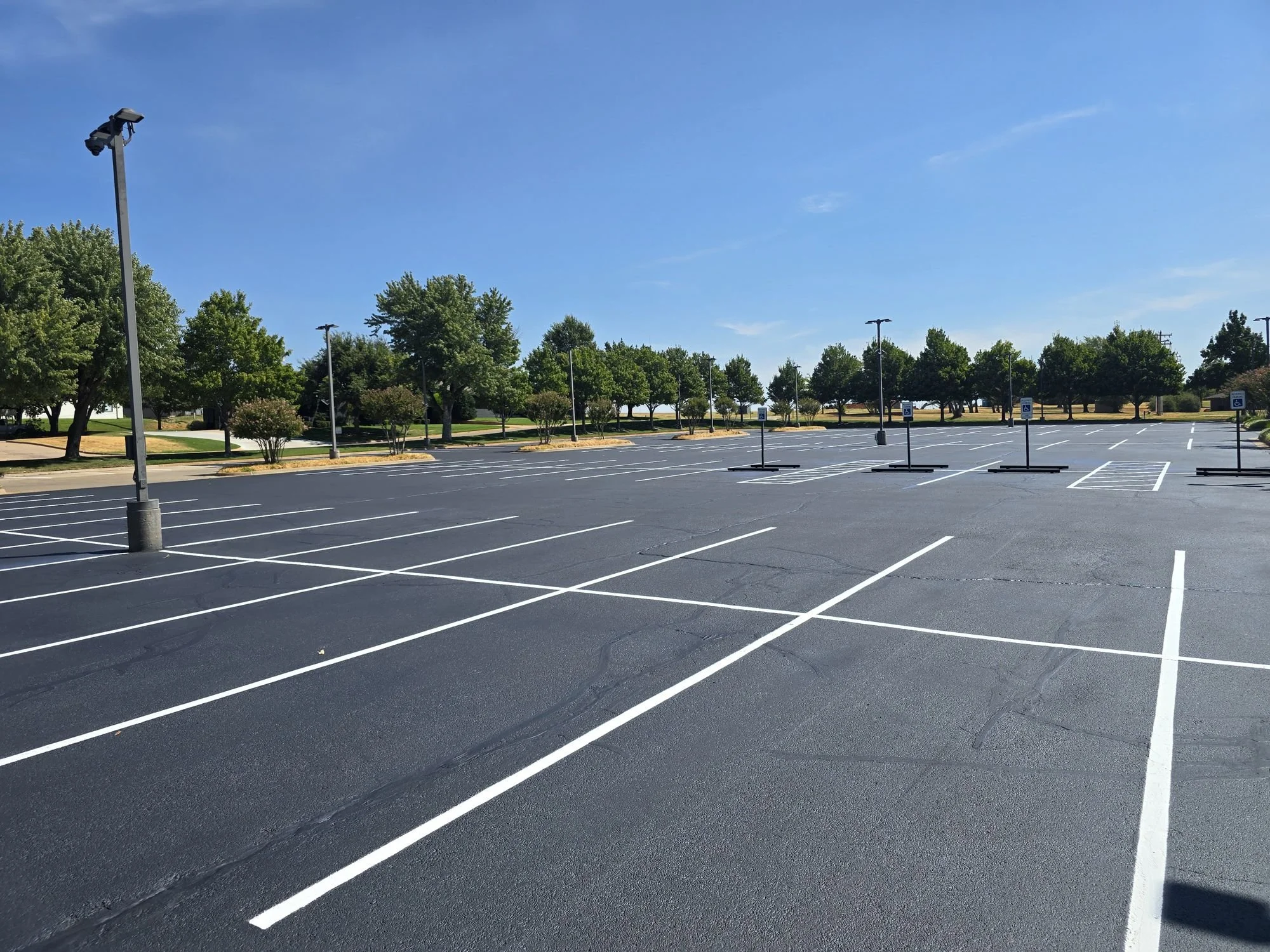
This year our crew completed three projects at a corporate office campus in Oklahoma City. The work included sealcoating, restriping, crosswalks and accessible parking spaces. We also sealcoated a church parking lot in Mustang in 2022.
Frequently asked questions
How long do cars have to stay off fresh sealcoat? Manufacturer specifications commonly call for at least 24 hours before traffic, and weather can stretch that. We'll give you the timing for your lot before work starts so you can plan around it.
Can you sealcoat in the winter? Generally not. Sealer needs warm, dry conditions to cure, so cold-weather months are better for planning and budgeting. Crack sealing has its own weather limits, so ask about timing for your lot.
Do cracks have to be fixed before sealcoating? Yes. Open cracks should be cleaned and sealed first. Otherwise water can still get under the new coat.
Will sealcoating fix potholes? No. Potholes and badly broken areas need repair first. Sealcoat protects pavement that's still sound.
Not sure if your lot is due?
We sealcoat, crack seal and stripe parking lots for businesses, churches, HOAs and property managers in Oklahoma City, Edmond, Norman, Moore and across central Oklahoma. We'll walk your lot, point out what needs attention, and give you a quote for parking lot sealcoating, crack sealing and restriping.
Call Stephen at (405) 403-2638 to set up a walk-through.