If you manage a commercial property, a church campus or an HOA in the Oklahoma City area, sealcoating season is behind us. Our crews sealcoat from May through September, when it’s warm enough for sealer to cure. That doesn’t mean the lot has to sit until spring. The off-season is the best time to plan and budget for next year, and asphalt crack sealing in Oklahoma City can keep going through the winter on suitable dry days.
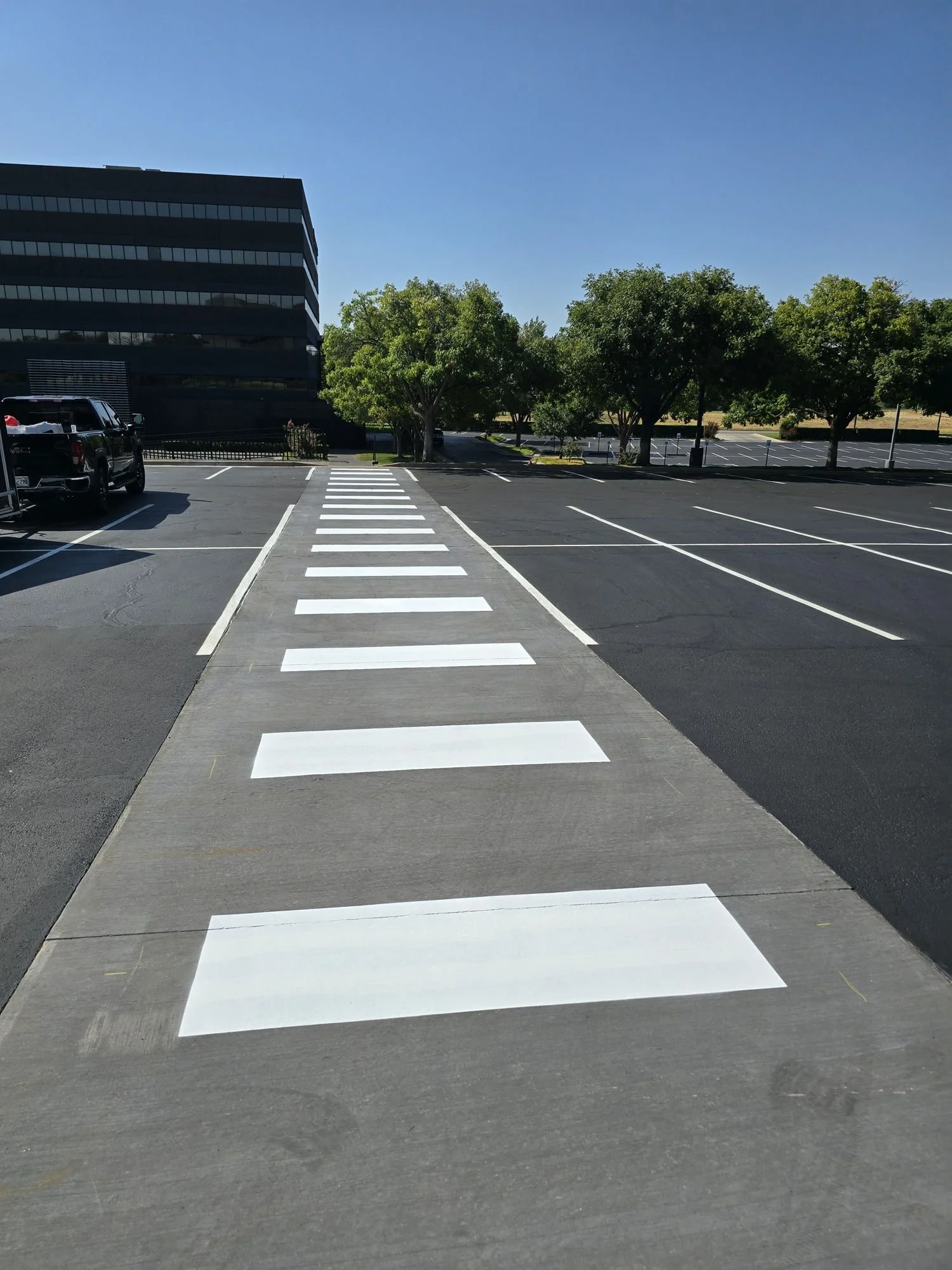
Here’s how to use the next few months so your lot is ready, and your budget is set, before the 2027 season starts.
Why the off-season matters
Most parking lot problems start small. A crack opens up, water gets in, and the damage grows from there. In Oklahoma, winter brings freeze-thaw cycles: water in a crack freezes, expands, thaws and does it again. Each cycle pushes the crack a little wider and works water down toward the base. By spring, a crack that was easy to seal in the fall can become alligator cracking or a pothole.
Winter is also when a lot of property managers, church boards and HOA boards set next year’s budgets. If parking lot work isn’t in the plan now, it’s hard to add later. Using the off-season for both crack sealing and planning puts you ahead on both fronts.
Crack sealing through the winter
Crack sealing is the job that keeps water out of open cracks. We clean out the crack and fill it with sealant so rain and snowmelt can’t get under the pavement.
It isn’t an any-weather job. The cracks have to be clean and dry, and the weather has to cooperate. Oklahoma winters have plenty of dry stretches, though, so on suitable days we can keep sealing cracks through the season. We’ll watch the forecast for your lot and schedule around it.
Why do it now instead of waiting for spring?
Less water gets into the base. Every wet spell and freeze with open cracks is more chance for damage.
Spring is busy. Getting cracks done in winter frees up spring for sealcoating and striping.
Sealcoat needs it anyway. Open cracks have to be sealed before sealcoating. Sealcoat alone won’t keep water out of a crack. Doing that step early means your lot is ready when the season opens.
See our asphalt crack sealing page for more on how we do it.
Walk your lot and take notes
Before you set a budget, walk the lot. A phone camera and a site map are enough. Look for:
Open cracks, especially in drive lanes, entrances and along curbs
Areas of “alligator” cracking, potholes or sinking spots, which usually need repair, not just sealant
Places where water stands after rain
Pavement that has faded to gray or where the stone is showing
Oil and fuel stains in stalls, drive-thrus and loading areas
Faded stall lines, crosswalks, fire lanes and accessible space markings
Mark what you find on the map. That gives you, and any contractor you call, a clear picture of what the lot needs.
Plan and budget for 2027
With your notes in hand, build next year’s plan around a few questions.
Is the lot due for sealcoat? Sealer manufacturers usually put the typical interval at about three years, adjusted for traffic, sun and the condition of the lot. Our first post, How Often Should You Sealcoat a Parking Lot in Oklahoma?, covers how to tell. If the surface is gray and dry, plan for parking lot sealcoating in 2027.
What has to happen first? Cracks get sealed before sealcoat, and broken areas get repaired before either. Put those steps in the plan in order.
Does it need restriping? Fresh sealcoat covers the old lines, so restriping goes right after. Budget them together. See our parking lot striping and ADA layouts page.
What about accessible parking? The U.S. Access Board’s guide to the ADA Standards says resealing or resurfacing a lot counts as an alteration, so accessible spaces have to meet the required count, not just be repainted where they were. Winter is a good time to review your layout. State and local codes can add requirements, so check with your local code office if you’re unsure.
When can the lot close? Most lots can’t just shut down. Note your business hours, weekend services, events and busy seasons. Larger lots can often be done in sections so part of the lot stays open.
Why we use coal tar sealer
When it’s time to sealcoat, we use Vance Brothers coal tar sealer. In our experience it’s stronger and lasts longer than asphalt emulsion or blended sealers, which is why we’ve chosen it for our customers’ lots. If you’re comparing quotes for 2027, ask each contractor what sealer they use.
Get on the schedule early
Our sealcoating season runs May through September, and the best dates go first. Booking early lets you pick dates that work around your tenants, members or residents, and lets us plan crack sealing, sealcoat and striping as one project. If you’d like the cracks done this winter, we can get those on the calendar now and schedule the rest for spring and summer.
Frequently asked questions
Can you crack seal in the winter? Yes, on suitable dry days. The cracks need to be clean and dry, so we schedule around the weather. It isn’t an any-weather job.
Can you sealcoat in the winter? Generally not. Sealer needs warm, dry weather to cure, which is why our sealcoating season runs May through September.
Do I have to sealcoat the same year I crack seal? No. Crack sealing protects the lot on its own by keeping water out. If sealcoat is in next year’s plan, sealing the cracks first gets the lot ready.
What should I have ready before calling for a quote? A rough idea of the problem areas, any times the lot can’t close, and whether you want striping or an accessible parking review included.
Get ahead of next season
We crack seal, sealcoat and stripe parking lots for businesses, churches, HOAs and property managers in Oklahoma City, Edmond, Norman, Moore and across central Oklahoma. We’ll walk your lot, point out what needs attention now and what can wait, and give you a quote you can put in next year’s budget.
Call Stephen at (405) 403-2638 to set up a walk-through.